Introduction
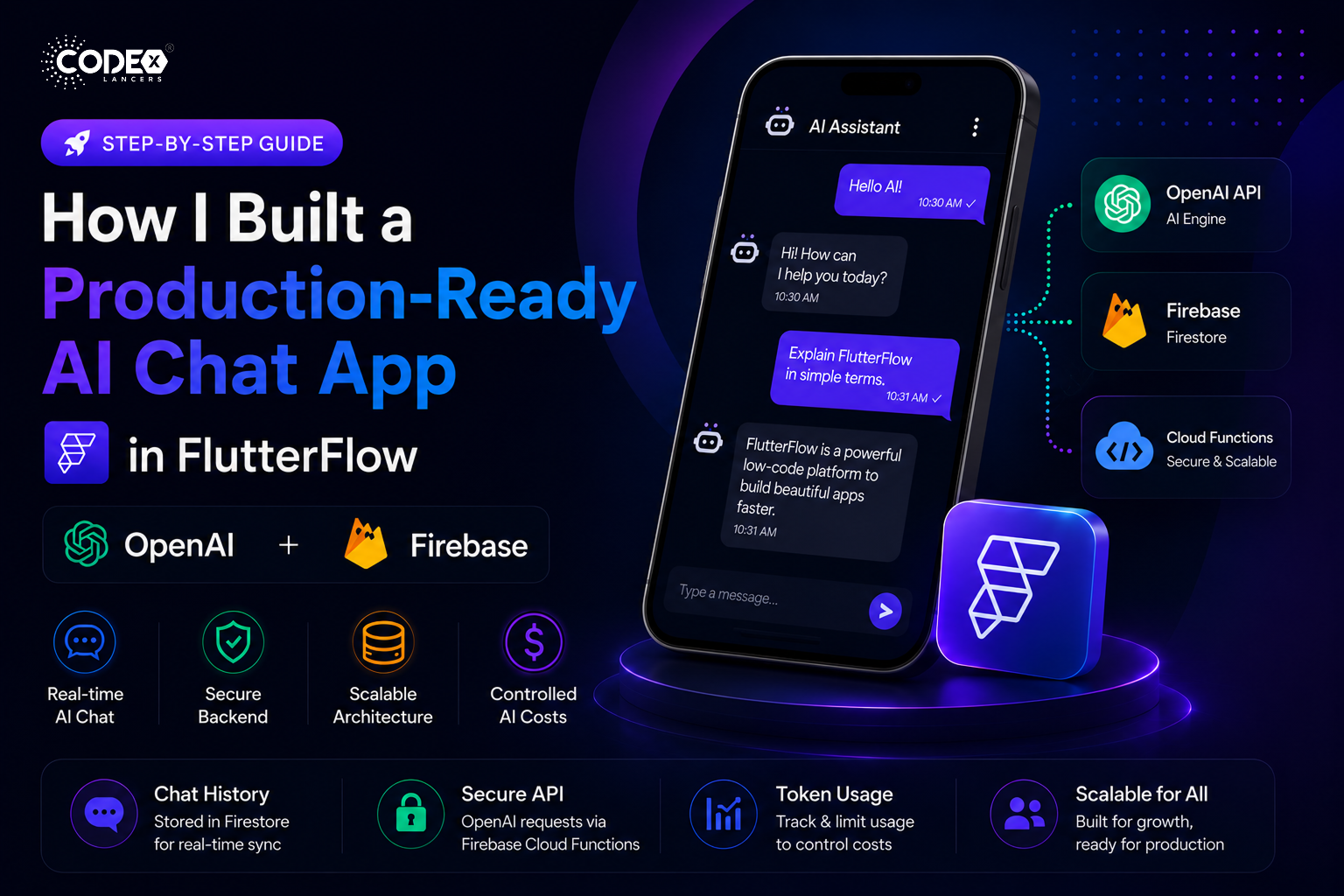
AI is everywhere in 2026 but building a production-ready AI chat app is still challenging, especially when using low-code tools like FlutterFlow. In this article, I’ll walk you through how I built a scalable AI chat system using FlutterFlow + Firebase + OpenAI API.
Architecture Overview
- Frontend : FlutterFlow UI
- Backend : Firebase (Firestore + Cloud Functions)
- AI Engine : OpenAI API
- Storage : Chat history in Firestore
Chat Data Structure
Each message is stored like this enabling easy chat history retrieval, real-time UI updates, and a scalable structure:
{
  "userId": "123",
  "message": "Hello AI",
  "response": "Hi, how can I help?",
  "timestamp": "server_time"
}
Securing the OpenAI API
Never expose your API key in the frontend. Instead, use Firebase Cloud Functions as a proxy send request → backend → OpenAI → return response. This keeps your app secure and your key hidden.
Handling Token Usage (Cost Control)
AI APIs can get expensive. To keep costs under control:
- Limit message length per request
- Store token usage per user in Firestore
- Restrict free users with a daily message limit
UI Challenges & Solutions
Problem: Chat UI lag with many messages. Solution: Pagination, lazy loading, and efficient Firestore queries to render only what’s needed.
Final Result
- Real-time AI chat
- Scalable backend
- Controlled cost
- Smooth UI
Conclusion
FlutterFlow is powerful but combining it with backend logic is the real game-changer. With Firebase handling the secure backend and OpenAI powering the intelligence, you can build a production-ready AI chat system that scales, stays secure, and keeps costs under control.